
Standard vs Custom-Made Fasteners: When Does Your Project Need a Custom Solution?
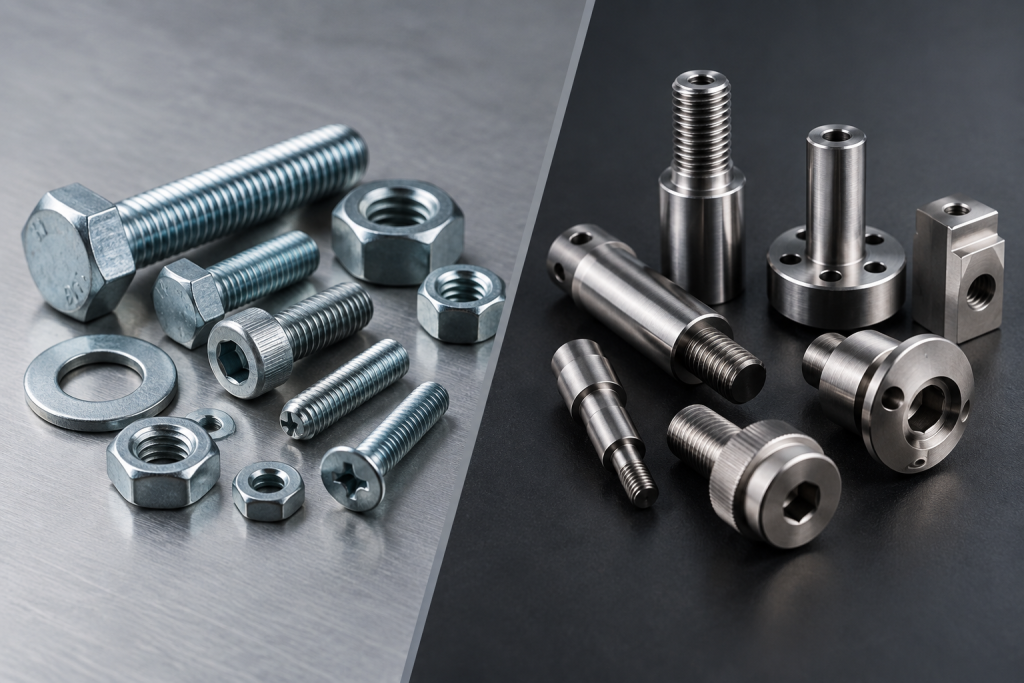
Choosing between standard vs custom fasteners often depends on how specific the application is. Standard fasteners suit many common engineering, machinery and construction requirements because their sizes, thread forms and specifications are widely available. However, some projects involve dimensions, materials or designs that do not match standard options.
In those cases, custom-made fasteners can provide another route to consider.
The main difference comes down to how closely an existing standard fastener matches the required dimensions, material, performance and operating conditions.
Profast supplies both standard and custom-made fasteners in Malaysia, including special parts produced according to customer drawings and specifications.
What Are Standard Fasteners?
Standard fasteners are bolts, screws, nuts, washers, studs and other fastening components produced according to commonly recognised dimensions, thread forms and specifications.
Because they are available in established sizes and configurations, they are often easier to source and replace.
- Hex bolts
- Machine screws
- Socket screws
- Nuts
- Washers
- Threaded rods
- Studs
- Anchors
Standard fasteners can work well across industrial, machinery, construction and maintenance applications when the available size, material and performance specification already match the project.
For example, ISO 898-1 specifies mechanical and physical properties for certain carbon and alloy steel bolts, screws and studs with defined property classes.
You can also explore Profast’s range of standard fasteners and industrial hardware.
What Are Custom Fasteners?
Custom fasteners are non-standard components produced around specific project requirements.
Instead of selecting an existing catalogue size, the manufacturer may work from details such as:
- Customer drawings
- Dimensions
- Thread specifications
- Material requirements
- Strength requirements
- Surface finish
- Special geometry
- Application requirements
Profast specialises in standard, non-standard and special custom-made fasteners, with parts produced according to customer drawings and specifications.
This makes custom fasteners relevant when a standard component does not closely match the required assembly or operating conditions.
Standard vs Custom Fasteners: Key Differences
| Factor | Standard Fasteners | Custom Fasteners |
|---|---|---|
| Dimensions | Available in established sizes and thread specifications | Can be produced according to project-specific dimensions |
| Design | Uses common bolt, screw, nut and stud designs | Can follow customer drawings or special geometry |
| Availability | Generally easier to source from stock | Requires manufacturing or special sourcing |
| Application | Suitable for common industrial and engineering requirements | Useful when standard components do not meet the required specification |
| Material & Grade | Selected from available standard options | Can be specified according to the required design and application, subject to manufacturing capability |
| Replacement | Usually easier to replace with the same standard specification | May require the original drawing or specification for reproduction |
When Are Standard Fasteners Usually Suitable?
Standard fasteners often make sense when the project uses common dimensions, thread forms and mechanical requirements.
They may be suitable when:
- The equipment already follows recognised fastener specifications
- The required size is commercially available
- No unusual geometry is involved
- Replacement parts need to remain easy to source
- The operating conditions fall within the selected fastener’s specification
Another advantage is replacement. When the fastener follows a standard specification, maintenance teams can usually identify and source an equivalent component more easily.
Where Can Custom-Made Fasteners Be Useful?
1. Standard Sizes Do Not Match the Assembly
A machine or equipment design may require a particular length, diameter, thread or head configuration that is not commonly available.
In that situation, a custom component can be produced around the required dimensions rather than adapting the assembly around the nearest standard size.
2. The Project Uses a Special Shape or Geometry
Some components need more than a conventional bolt or screw.
For example, the design may include:
- A special head profile
- Unusual shoulder dimensions
- Non-standard thread length
- A specific unthreaded section
- Special machined features
These requirements can make a purpose-made part more suitable than heavily modifying a standard fastener.
3. The Application Has Specific Material or Grade Requirements
Material selection can affect mechanical performance, corrosion resistance and suitability for the operating environment.
Profast works with materials including stainless steel, mild steel and high-tensile steel, together with various surface finishes. Learn more about Profast’s fastener materials and finishing options.
For certain carbon and alloy steel bolts, screws and studs, ISO 898-1 specifies mechanical and physical properties for defined property classes.
For corrosion-resistant stainless steel fasteners, ISO 3506-1 covers mechanical and physical properties for bolts, screws and studs across several stainless-steel grades and property classes.
In practice, the material and grade usually need to match the application rather than being selected by appearance alone.
4. The Operating Environment Is More Demanding
Fasteners can be exposed to very different service conditions, including:
- Moisture
- Chemicals
- Outdoor exposure
- Heat
- Vibration
- Heavy mechanical loads
These conditions can influence the material, grade and finish that may be appropriate for the application.
5. An Existing Machine Uses a Non-Standard Part
Older or specialised machinery can sometimes use fasteners that are difficult to replace from standard stock.
If the original part has unusual dimensions or geometry, reproducing it as a custom-made component can be one option to explore.
In this type of project, the original drawing, sample or dimensional specification can provide useful reference information.
What Information Is Useful for a Custom Fastener?
Custom manufacturing usually becomes easier to evaluate when the technical information is clear.
Useful details can include:
- Technical drawing
- Overall dimensions
- Thread type and pitch
- Material
- Strength grade
- Surface finish
- Quantity
- Intended application
- Operating environment
- Critical tolerances
Profast supports custom manufacturing based on customer drawings and specifications, so these details can help define the required component more clearly.
For an existing machine or assembly, the original part specification can also provide a useful reference.
Does Material Matter for a Custom Fastener?
Yes, because the material can influence strength, corrosion resistance and behaviour under different operating conditions.
For example, carbon and alloy steel fasteners can use defined property classes under ISO 898-1, while stainless steel fasteners follow separate material and property-class requirements under ISO 3506.
There is no single material that fits every application. The most suitable option usually depends on the expected load, environment, design and performance requirements.
What About Surface Finish and Coating?
Surface finishing can influence both appearance and protection.
Profast lists finishing options including:
- Blue zinc plated
- Yellow zinc plated
- Black zinc
- Black oxide
- Nickel plated
- Hot-dip galvanized
- Dacromet
Different finishes suit different requirements, so the choice often depends on the intended application and environment.
For custom fasteners, the finish can be specified together with the material and dimensions where relevant.
Custom Fasteners vs Modifying a Standard Fastener
In some cases, modifying a standard fastener may appear to be the simpler route.
However, substantial cutting or machining can change important dimensions or characteristics of the original fastener.
For straightforward, non-critical adjustments, modifying an existing component may still be practical. For more specialised requirements, manufacturing a component to the required specification can offer better control over the final geometry and dimensions.
What to Consider When Comparing Custom Fastener Options
A few practical details can help clarify whether a standard or custom option better matches the application.
Is there already a standard fastener that fits?
If an existing standard size and specification meet the requirement, it may offer a simpler sourcing and replacement route.
Which dimensions are important to the assembly?
Some measurements may directly affect fit or function, while others may have more flexibility.
What material and grade does the application call for?
Strength, corrosion exposure and service conditions can all influence the choice.
Is a particular surface finish required?
The finish may be linked to protection, appearance or the intended service environment.
What quantity is required?
Quantity can affect which manufacturing approach is practical for the project.
Is a drawing or sample available?
A drawing, specification or existing component can make the required design easier to communicate.
Standard or Custom: Which Fits the Application?
Standard and custom fasteners each have their place.
If an existing fastener already matches the required dimensions, material and performance, a standard option may be the straightforward choice.
When a project involves unusual dimensions, specialised geometry or application-specific requirements, a custom-made fastener offers another route to explore.
Ultimately, the better option depends on how closely the available standard product matches the actual technical requirement.
Frequently Asked Questions
What is the difference between standard and custom fasteners?
Standard fasteners are produced in established dimensions and specifications, while custom fasteners are manufactured according to specific project requirements such as drawings, dimensions or technical specifications.
When can custom fasteners be useful?
Custom fasteners can be useful when standard components do not meet the required dimensions, geometry, material, grade or application conditions.
What information is useful when producing a custom fastener?
Common details include a technical drawing, dimensions, thread specification, material, strength grade, surface finish, quantity and application requirements.
Can custom fasteners use different materials?
Yes, depending on the manufacturer’s capability and the project requirements. Profast works with materials including stainless steel, mild steel and high-tensile steel, together with selected specialty materials.
How can I tell if a fastener is metric or imperial?
Metric fasteners normally use dimensions and thread pitches measured in millimetres, while imperial fasteners use inch-based dimensions and thread counts. When replacing an existing fastener, checking the original specification or measuring the thread can help identify the system more accurately.
Exploring Standard or Custom Fastener Options?
The right fastener depends on the assembly, operating environment and technical requirements.
Profast supplies standard industrial fasteners and also supports custom-made fasteners based on customer drawings and specifications. Its capabilities include CNC turning, CNC milling and laser cutting for specialised manufacturing requirements.
For projects involving non-standard components, the Profast team can review the available information and discuss suitable fastener options.